This post contains affiliate links. I may earn a commission if you buy through my link, at no extra cost to you.
In most unfinished novels, chapter one is the best-written part of the whole file.
It has been rewritten more times than its author can count, while the rest of the book is a few scenes and a lot of blank space.
The way out takes about an afternoon of planning, and it starts at the end of the book.
An opening chapter has a big job. It introduces the people, the place and the problem that the rest of the book will pay off.
If you don't know what the payoff is, you can't tell whether the setup is right.
So the opening never feels finished, and you keep going back to tweak it.
Every rewrite feels useful because the sentences really do improve.
Meanwhile the book stays the same length, and a few months later the excitement that started it has gone.
Writers love to argue about planning.
Plotters map out the whole book before they write, and pantsers (who write "by the seat of their pants") make it up as they go.
Both camps finish books.
For a first novel, though, a short outline saves a lot of pain, because you don't yet have the experience to feel where a story is heading without one.
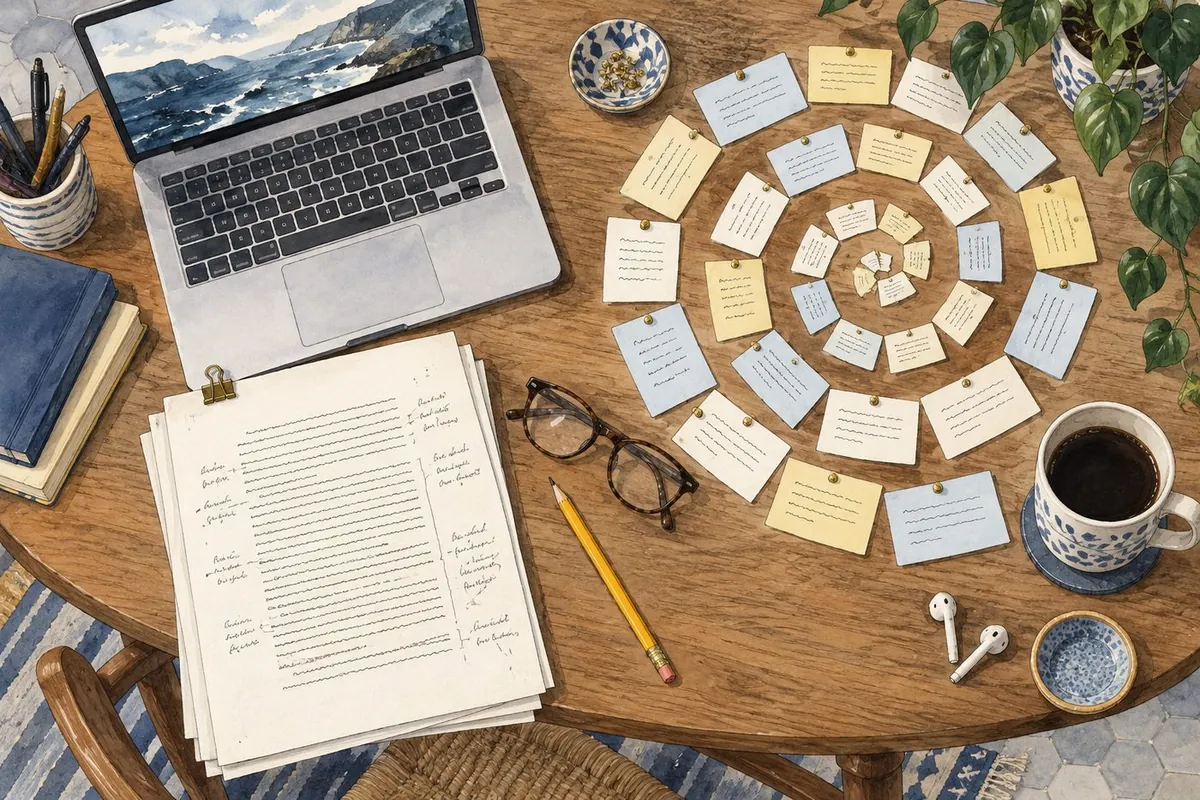
A useful outline is also much smaller than most people imagine. It fits on a stack of index cards.
That is enough to start writing.
With the cards in front of you, you always know which scene to write today. And because you already know the ending, chapter one can wait until the draft is done, when you'll know exactly what it has to set up.
When a better idea turns up halfway through, add a card or move one and carry on.
An outline is there to keep you writing, so change it whenever the story finds something stronger.
Lindsay Lake is an Amazon.com top selling author, best known for Private Seduction in her Hideaway of Desires romance series, and she has her own outline method that she gives a lot of credit to.
Before she was a novelist, she says she "had a head full of stories" but couldn't seem to get them down on paper.
Once she found herself raising three children on her own after her husband left, she made up her mind to work out how real novelists get a book finished.
On her sales page she calls her outline method the Fruition Tree technique, and says she uses it "to quickly whip up a kick-ass novel outline."
She also says it helps you avoid "the one deadly mistake that most authors make when trying to plan their novels."
What that mistake is, she keeps for the program itself.
She goes further and calls the Fruition Tree "the single-handed reason" she was able to complete a whole first draft in just 14 days.
Her words are that a novel can be done "in as little as 14 days," and she adds straight away that the real time depends on your goals and the kind of book you write.
A tight romance and a giant fantasy world are very different jobs.
The Fruition Tree is one part of Lindsay Lake's Hurricane Method, her complete novel-writing program, which also covers characters, dialogue, writer's block and getting published.
It costs $47, paid once, with a 60-day money-back guarantee, and Lindsay explains the Fruition Tree in her own words on her page.
Whatever you decide about the program, do this before you touch chapter one again: write your whole story in one sentence, then write your ending.